Ready to grow?
Website Helped Robert Geans Win $308K Job
2x Expected Opening Weekend Attendance
Cheetos Collab drove 184K+ Impressions
Donations Up 250% After Video
Our Design Helped Secure $50M Grant


CPG brands’ product launch campaigns are coordinated creative and advertising programs designed to turn a new consumer product into trial purchases and repeat demand. Unlike a campaign for an established product, a launch must explain what is new, give shoppers a reason to switch, and direct them to a purchase channel that can fulfill the demand.
TL;DR
A CPG launch connects several decisions that otherwise sit in separate departments: the product promise, retailer commitments, production schedules, advertising, and sales measurement. If those decisions conflict, your campaign sends shoppers toward an experience the business is not ready to deliver.
For your 2027 launch, treat creative and placement as one assignment. A product demonstration needs the right audience and buying context. A media plan needs creative that explains the product clearly enough to earn attention and purchase consideration.
J2 Marketing fits consumer teams seeking campaign, creative production, and ad placement under one annual plan. J2 Marketing offers research, strategy, advertising, branding, and video/photo production. That service mix is relevant when your launch requires a connected campaign rather than a separate vendor for every asset.
The agency brief still needs commercial facts from your team. Distribution, contribution margin, retailer requirements, and approved product claims belong in the planning process before anyone buys media. An outside partner does not replace that internal knowledge.
Start with a planning document your team can write without buying a tool: a 1-page launch brief. Name the consumer, the product, the buying occasion, and the business outcome. A memorable campaign idea is not a substitute for that decision.
Separate your growth target from your communications objective. Introducing a product to unfamiliar shoppers is a communications task; generating incremental product revenue is a business outcome. Your campaign needs both, with a clear explanation of how the first supports the second.
Set targets from your business plan and existing sales data, not an industry average detached from your distribution. For a 2027 launch, distinguish new buyers from customers shifting their spending away from another product in your range. That distinction prevents a successful-looking launch from hiding substitution.
Finish the brief with these decisions:
Build a distribution map in a spreadsheet first. Record the sales channels, relevant markets, planned launch dates, and who confirms readiness. Then match campaign geography and purchase instructions to that map.
Retail-led launches and direct-to-consumer launches need different buying directions. A retail campaign should help shoppers recognize the product and find a participating purchase location. A direct-to-consumer campaign should make the product proposition and ordering path clear. Neither route works when the advertisement promises a purchase experience the business cannot support.
For launches spanning several markets, separate confirmed distribution from planned expansion. Do not treat a future retail agreement as a reason to advertise nationally today. Your internal readiness review should also include customer support and the product information consumers will see after an advertisement.
J2 Marketing’s research, strategy, and advertising services fit this planning stage when you need an outside partner to connect the market plan with campaign execution. Your team still supplies the distribution facts.
Write the message in plain language before commissioning production. Explain what the product is, who it serves, and why that shopper should choose it over their current alternative. Read the statement without the campaign slogan; it should still make sense.
Then organize the creative brief around four parts. The product truth identifies what you are launching. The consumer benefit explains why it matters. Proof supports the claim. The purchase action tells the shopper what to do next.
Your 2027 production plan should follow those decisions, not begin with a preferred visual treatment. An attractive film that leaves the product unfamiliar creates a different problem from a clear demonstration with an unconvincing benefit. Review those problems separately.
For a full campaign, J2 Marketing’s branding and video/photo production services belong alongside the advertising brief. Approve the message and intended placements before production starts. That keeps the asset requirements tied to the campaign rather than to an isolated shoot.
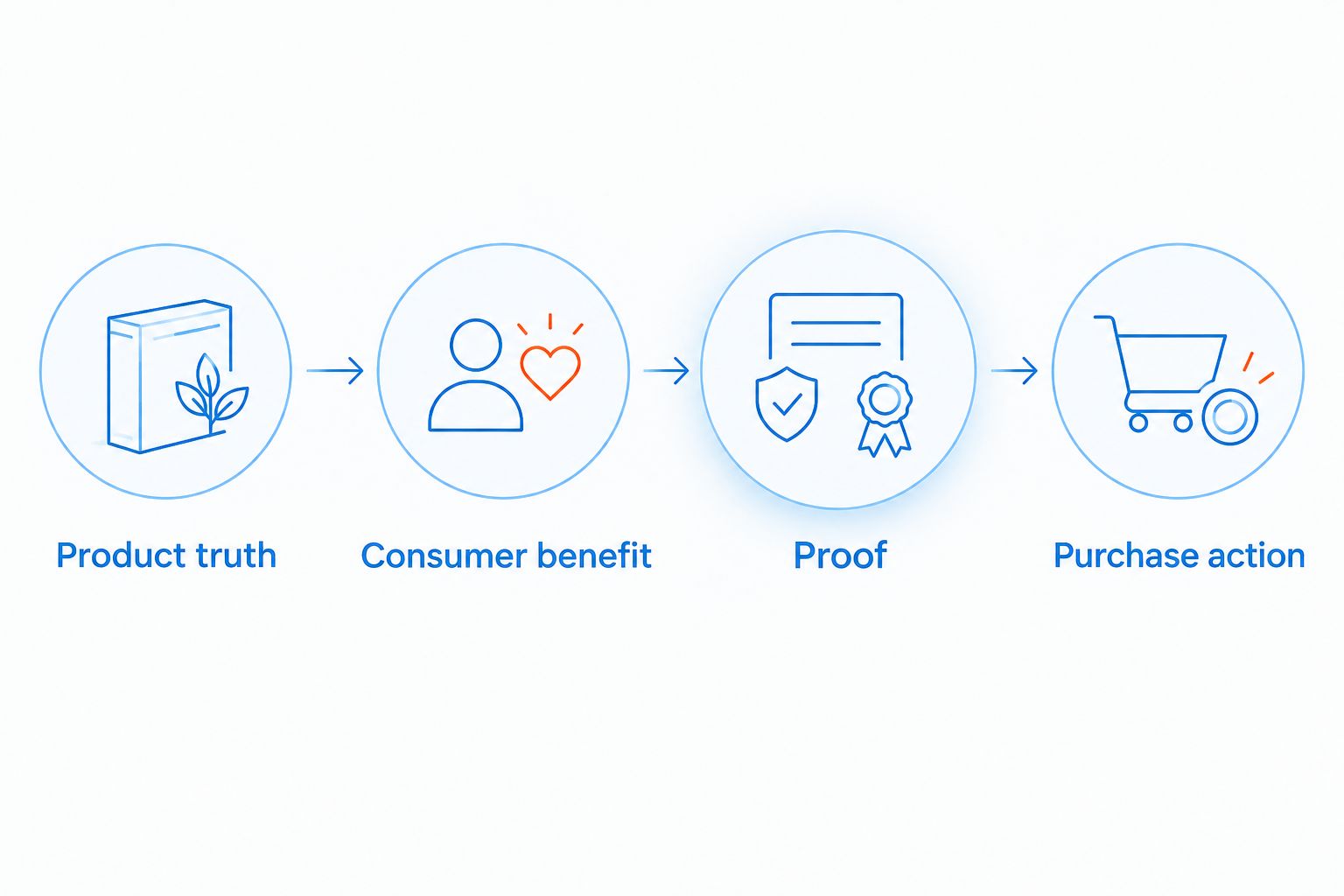
Approve the message and purchase action before production starts.
Start with a placement worksheet, not a collection of channel wish lists. For each proposed placement, record its audience, campaign job, required asset, destination, and measurement method. You can do this in the same shared spreadsheet as the launch schedule.
Assign channels specific roles. Broad-reach placements can introduce the product; demonstrations can explain unfamiliar uses; purchase-oriented messages can direct interested shoppers toward the buying route. Do not assume every channel should carry the same edit, headline, or call to action.
Traditional and digital advertising belong in the same review when both serve your consumer and market plan. Choose the combination based on where your audience encounters the category, what the creative must communicate, and what your budget can support. More channels are not automatically a better plan.
Include production requirements in the placement decision. If a proposed channel needs assets your team cannot produce or approve on schedule, resolve that dependency before committing the spend.
Build the launch calendar backward from the first confirmed selling date. A calendar is useful only when its milestones reflect what must be true before advertising begins. Publishing dates alone do not establish readiness.
Use three phases: preparation, launch, and follow-through. Preparation covers claims, distribution checks, production, and measurement setup. Launch introduces the product and supports trial. Follow-through addresses consumer questions, updates creative, and evaluates whether demand continues beyond the initial announcement.
For your 2027 calendar, schedule a 30-day review window after advertising begins as a planning checkpoint, not a universal performance benchmark. Review delivery, creative response, purchase activity, and distribution issues together. Categories with longer purchase cycles need a separate repeat-purchase observation period.
An annual plan should connect the launch to the rest of your marketing commitments. Put the campaign inside a 12-month planning calendar so the launch does not consume resources already assigned to seasonal activity or established products.
Begin with the sales and advertising reports you already have. Create a shared view of spending, creative delivery, purchase activity, and distribution changes. Define each measure before launch so departments do not report different versions of success.
Separate attention measures from commercial outcomes. Reach, views, and engagement describe exposure or interaction. Product revenue, trial purchases, and repeat purchases address the business objective. Neither group explains the whole launch on its own.
Document attribution limits. Advertising platforms can assign credit differently, and retailer sales reports do not automatically identify the advertisement that influenced a shopper. Avoid adding separate platform conversion totals together as though they represent distinct buyers.
For a 2027 evaluation, keep a dated record of campaign changes, promotional activity, and distribution expansion. That record helps your team interpret a sales movement without assigning all credit to the latest creative change. Report what the evidence establishes, not what the campaign needs to claim.
Choose the delivery model according to your internal capacity and the amount of coordination the launch requires. There is no single model that removes the need for an accountable brand-side decision-maker.
In-house campaign team
Specialist production partner
Specialist media partner
Integrated campaign agency
A production engagement is not the same assignment as an integrated launch campaign. Ask prospective partners to explain which decisions they own, which deliverables they supply, and where your team remains accountable. Compare scopes on that basis rather than treating every proposal as interchangeable.
Discuss your product launch campaign
Connect campaign strategy, creative production, and ad placement to your annual marketing plan.
A national audience is not a national purchase route. Match paid geography to where shoppers can complete the buying action, then expand when distribution supports the change.
Production needs placement requirements. Approve the message, intended formats, and purchase instructions first; otherwise, your team must adapt a finished asset to an assignment it was not built to perform.
Product delivered to a retail channel and product purchased by consumers are different measures. Label them separately in launch reporting so retailer orders do not stand in for shopper response.
Launch day introduces the product; it does not answer every buying question. Plan follow-through messages around product use, relevant objections, and the next purchase occasion.
Existing customers can shift purchases from another item in your range. Examine the wider product portfolio before claiming that launch revenue represents additional business growth.
What are product launch campaigns for CPG brands?
Product launch campaigns for CPG brands coordinate messaging, creative production, and advertising to introduce a consumer product and support purchases. The plan should connect the consumer promise to distribution, trial, and repeat demand.
When should a CPG brand start planning a product launch campaign?
Start planning before committing to creative production or media placements. Work backward from the confirmed selling date and identify approval, distribution, production, and reporting dependencies.
Should a CPG launch use traditional or digital advertising?
Use the combination that fits the audience, market coverage, creative requirements, and purchase route. Give each selected channel a defined campaign job instead of adding channels simply to widen the plan.
Is an integrated agency better than a production partner?
An integrated agency fits launches that need coordinated strategy, creative production, and media placement. A production partner fits brands that already have campaign leadership and media capabilities in place.
How should a CPG brand measure launch success?
Measure success against the commercial outcome defined before launch, using product sales, trial purchases, and repeat purchases where those measures are available. Keep reach and engagement separate from revenue outcomes, and document attribution limits.
Can J2 Marketing support a consumer product launch?
J2 Marketing offers research, strategy, advertising, branding, and video/photo production for businesses and organizations. Its campaign, creative, and ad placement framing fits consumer teams seeking a connected launch plan; scope still needs to match the brand’s requirements.
Should a product launch have a separate plan from annual marketing?
Give the launch a specific brief and schedule, but connect it to the annual marketing plan. Review shared audiences, production capacity, media commitments, and established-product activity before approving the launch calendar.
Ask someone outside the launch team to review the main advertisement without the presentation explaining it. Can they identify the product, the reason to choose it, and the next action? Record their answers rather than supplying the missing explanation.
Your 2027 campaign should make the buying decision clearer, not require the consumer to understand your strategy. Use that test before production approval and again before the first placement goes live.
These guides address different consumer segments, with related questions about production and campaign planning: